Farshi Salwar Suit: What Is It, Its Meaning, Origin, and Why It Is Trending Again
Traditional Indian fashion is known for its timeless silhouettes, rich craftsmanship, and cultural significance. Among the many ethnic outfits that have evolved over the years, the farshi salwar suit has gained renewed attention for its distinctive shape and elegant appearance. Combining heritage-inspired design with contemporary styling, this outfit offers women a unique way to embrace traditional fashion while creating a sophisticated festive look.
But what is farshi salwar suit, and why are more women interested in this traditional silhouette today? From understanding the farshi salwar suit meaning to exploring the farshi salwar origin, there is much to discover about this distinctive ethnic outfit.
What Is Farshi Salwar Suit?
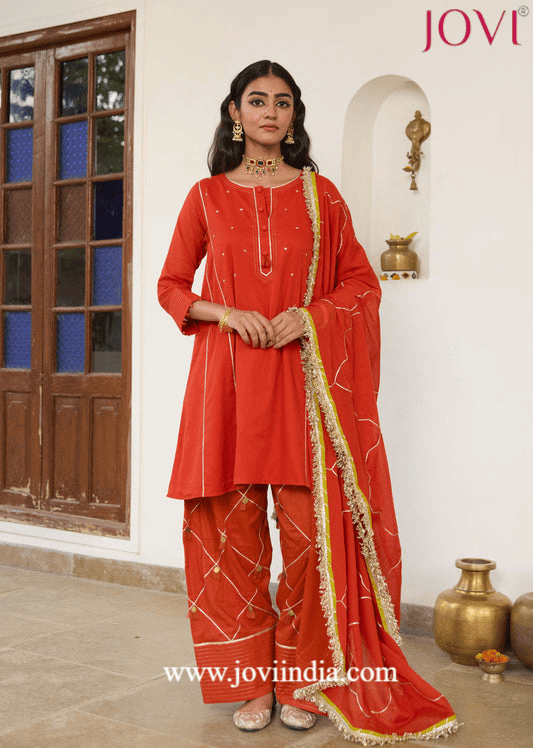
A farshi salwar suit is a traditional South Asian ethnic outfit recognized for its long, flowing salwar that creates a graceful, floor-skimming appearance. Unlike a conventional salwar, which generally gathers around the ankles, the Farshi style features a wider and more voluminous silhouette that falls elegantly toward the floor.
The word “Farshi” is associated with the idea of something that extends toward or touches the floor. This explains the distinctive visual character of the outfit and is also connected to the farshi salwar suit meaning.
A typical Farshi Salwar ensemble may include a long kurta or kameez, a flowing Farshi salwar, and a dupatta. Depending on the design, the outfit can feature embroidery, prints, embellishments, lace details, or other decorative elements.
The result is a silhouette that feels traditional, regal, and visually striking while offering plenty of room for modern interpretation.
Farshi Salwar Suit Meaning Explained
The farshi salwar suit meaning is closely connected to the distinctive length and structure of the salwar. The term “Farshi” is derived from the Persian word “farsh,” which refers to the floor or ground.
In the context of clothing, the name reflects the floor-length or floor-touching appearance associated with the traditional silhouette. This is what makes the Farshi Salwar different from everyday salwar styles.
The outfit is not simply a variation of a regular salwar suit. Its defining feature is the dramatic volume and length of the lower garment, which creates a distinctive flow as the wearer moves.
Today, the Farshi silhouette is being reimagined for contemporary wardrobes. Modern versions may be designed with lighter fabrics, updated proportions, and versatile styling options, making the traditional aesthetic more practical for today’s occasions.
Farshi Salwar Origin: Where Did It Come From?
The farshi salwar origin can be traced to the rich history of South Asian and Persian-influenced fashion. The style became particularly associated with traditional and royal wardrobes, where elaborate silhouettes and luxurious fabrics were an important part of formal dressing.
Historically, Farshi Salwar styles were worn as part of elaborate ensembles and were often paired with long kameez or kurtas and beautifully draped dupattas. The voluminous silhouette reflected the fashion preferences of earlier periods, when clothing was often designed to create a sense of grandeur and elegance.
Over time, fashion trends changed, and simpler silhouettes became more common for everyday wear. As a result, the Farshi Salwar gradually became less prominent in mainstream fashion.
However, traditional fashion often finds a way to return. With the growing interest in heritage-inspired clothing, vintage silhouettes, and Indian ethnic fashion, the Farshi Salwar has once again started attracting attention.
What Makes a Farshi Salwar Set Different?
A farshi salwar set stands out because of its distinctive silhouette. While regular salwar suits generally have a more structured or tapered lower garment, Farshi Salwar designs focus on volume, length, and fluidity.
Some of the key characteristics include:
A long and flowing salwar silhouette
Wide or voluminous lower fabric
Floor-touching or floor-skimming appearance
Traditional and graceful aesthetic
Coordinated kurta or kameez
Dupatta for completing the ethnic look
The beauty of a Farshi Salwar set lies in the movement of the fabric. When styled correctly, the flowing lower silhouette creates a dramatic yet elegant appearance.
Modern designs can also balance the traditional volume with contemporary cuts and fabrics, making them easier to style for today’s fashion-conscious women.
Why Is the Farshi Salwar Suit Trending Again?
The return of the farsi salwar suit reflects a larger trend in fashion: the revival of traditional silhouettes with modern styling.
Today’s consumers are increasingly interested in clothing that has a story, cultural connection, and distinctive design. Instead of choosing only conventional ethnic outfits, many women are exploring lesser-known traditional styles that allow them to express individuality.
The Farshi Salwar fits perfectly into this movement.
Its unique shape makes it different from standard ethnic wear, while its heritage-inspired appearance gives it a timeless quality. It can be styled for festive celebrations, weddings, cultural events, family gatherings, and special occasions.
Social media and digital fashion content have also contributed to the renewed interest in heritage-inspired clothing. Traditional silhouettes that were once considered old-fashioned are now being rediscovered and presented in fresh, contemporary ways.
JOVI India’s Farshi Salwar Suit
JOVI India brings the charm of traditional ethnic fashion into the modern wardrobe with its Farshi Salwar Suit collection. Designed for women who appreciate distinctive Indian silhouettes, a JOVI India farshi salwar suit offers an opportunity to explore a traditional-inspired style with a contemporary fashion perspective.
The outfit can be an excellent choice for women looking to move beyond conventional salwar suits and experiment with a more statement-making ethnic silhouette.
Depending on the occasion and styling preference, a Farshi Salwar set can be paired with traditional jewelry, embellished footwear, and a beautifully draped dupatta. Minimal accessories can create a sophisticated appearance, while statement jewelry can enhance the festive character of the outfit.
The versatility of the silhouette makes it suitable for women who want their ethnic wardrobe to feel both culturally inspired and visually distinctive.
How to Style a Farshi Salwar Suit
Styling a farshi salwar suit is all about balancing the dramatic silhouette with complementary accessories.
For a traditional look, pair the outfit with:
Jhumkas or chandbali earrings
Traditional bangles
Embellished juttis or mojaris
A coordinated dupatta
A small ethnic potli bag
For a contemporary appearance, keep the accessories minimal. Statement earrings paired with simple footwear can allow the Farshi silhouette to remain the focal point of the outfit.
For festive occasions, embroidered or embellished accessories can enhance the richness of the overall ensemble. For daytime gatherings, lighter accessories and softer makeup can create a more effortless look.
When Can You Wear a Farshi Salwar Set?
A Farshi Salwar set is particularly suitable for occasions where traditional and statement-making fashion is appreciated.
You can consider wearing it for:
Weddings and wedding-related functions
Festive celebrations
Eid and other cultural occasions
Family gatherings
Traditional ceremonies
Cultural events
Festive dinners and parties
The right fabric, color, and embellishment can determine how formal or casual the outfit appears.
Frequently Asked Questions About Farshi Salwar Suit
What is Farshi Salwar Suit?
A Farshi Salwar Suit is a traditional-inspired ethnic outfit featuring a long, wide, and flowing salwar that typically creates a floor-skimming silhouette. It is usually worn with a kurta or kameez and a dupatta.
What is the meaning of Farshi Salwar?
The farshi salwar suit meaning is associated with the floor-length appearance of the salwar. The term “Farshi” is linked to the Persian word “farsh,” meaning floor or ground.
What is the origin of Farshi Salwar?
The farshi salwar origin is connected with South Asian and Persian-influenced traditional fashion. The style became associated with elaborate and formal clothing before gradually being reinterpreted for contemporary ethnic wear.
Is Farshi Salwar the same as a regular Salwar Suit?
No. The primary difference is the silhouette. A traditional salwar is generally more gathered or tapered around the ankles, whereas a Farshi Salwar has a wider, longer, and more flowing appearance.
What is a Farshi Salwar Set?
A farshi salwar set generally consists of a Farshi-style salwar paired with a coordinating kurta or kameez and, in many designs, a matching dupatta.
Why is the Farshi Salwar Suit becoming popular again?
The farsi salwar suit is gaining attention because modern fashion is increasingly embracing heritage-inspired silhouettes. Its distinctive appearance, cultural connection, and elegant flow make it an attractive choice for women looking for something different from conventional ethnic wear.
Final Thoughts
The farshi salwar suit is more than just a traditional outfit. Its distinctive silhouette represents the evolution of South Asian fashion and demonstrates how historical clothing styles can find new relevance in modern wardrobes.
Understanding what is farshi salwar suit, its unique design, the farshi salwar suit meaning, and the farshi salwar origin helps explain why this traditional silhouette continues to attract attention.
With its flowing structure and elegant appearance, a Farshi Salwar set offers women an opportunity to explore heritage-inspired fashion in a contemporary way. JOVI India’s Farshi Salwar Suit is a stylish option for those who want to embrace this distinctive ethnic silhouette and add a unique touch to their festive and occasion-wear wardrobe.